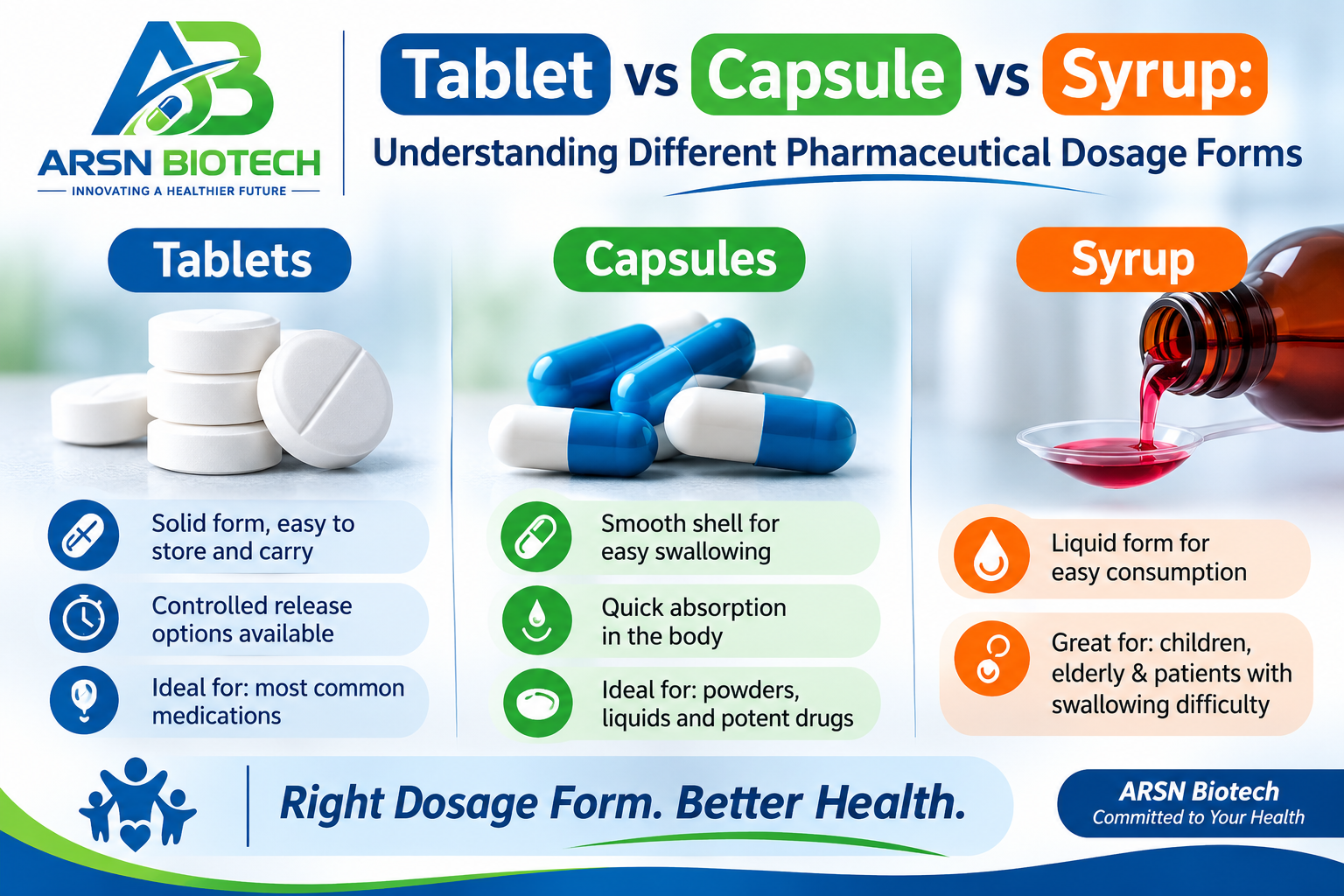
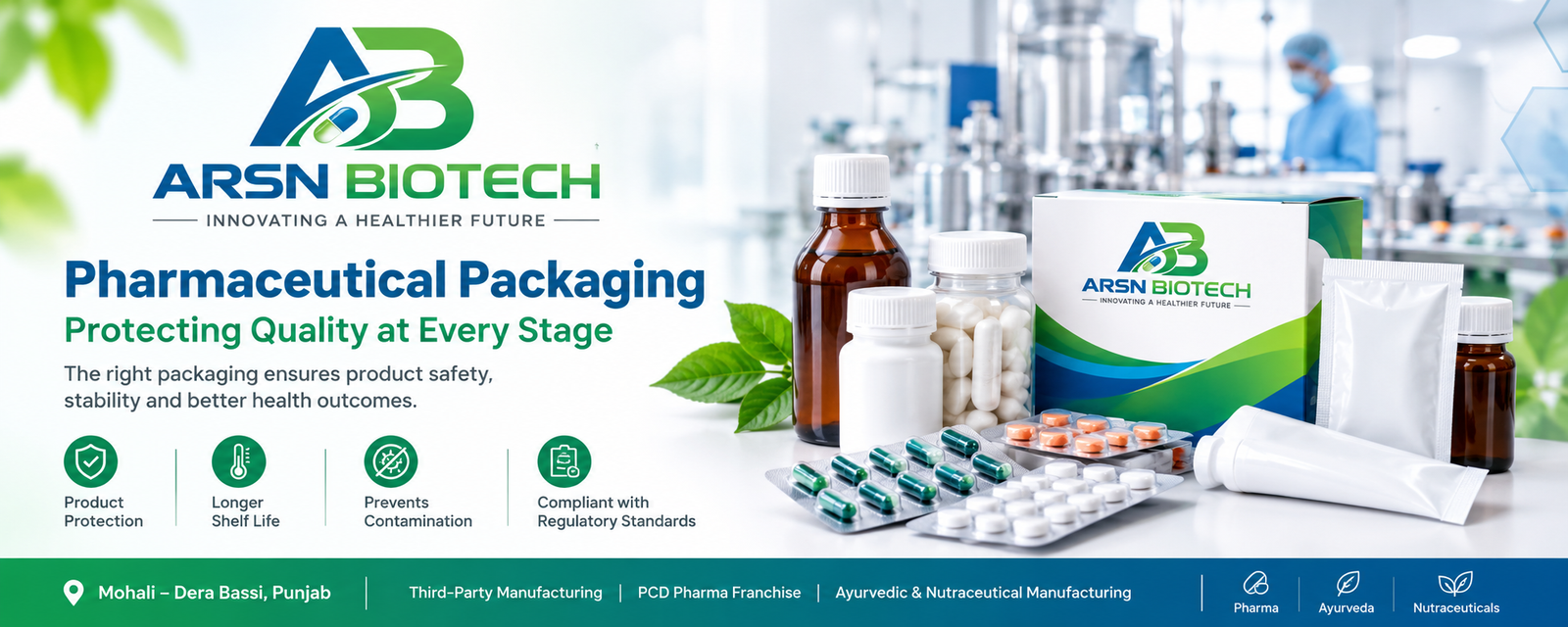
Pharmaceutical packaging plays an important role in maintaining the quality, safety and stability of medicines. It is much more than simply putting a product inside a bottle, blister or container. Proper packaging helps protect pharmaceutical products from environmental factors such as moisture, light, oxygen, contamination and physical damage.
For pharmaceutical companies, selecting suitable packaging is an important part of product development and manufacturing. The right packaging helps preserve product quality, supports safe storage and transportation, and provides essential information to healthcare professionals and consumers.
Businesses working with third-party pharmaceutical manufacturers should understand different packaging options before finalising their products.
At ARSN Biotech, based in the Mohali region of Punjab, we understand the importance of pharmaceutical manufacturing and product presentation. Packaging requirements should be considered alongside product formulation, quality requirements and applicable regulations.
1. What Is Pharmaceutical Packaging?
Pharmaceutical packaging refers to the materials and systems used to contain, protect, store and distribute medicines and healthcare products.
It serves several important purposes:
- Protects medicines from moisture, light and other environmental conditions.
- Helps maintain product stability throughout its intended shelf life.
- Reduces the risk of contamination and physical damage.
- Provides information such as product name, composition, batch number and expiry date.
- Supports proper storage, handling and transportation.
- Helps patients identify and use medicines correctly.
Packaging must be selected according to the product’s formulation, storage requirements, compatibility and applicable regulatory standards.
2. Different Types of Pharmaceutical Packaging
Pharmaceutical products are available in different dosage forms, and each may require a specific packaging system.
A. Primary Packaging
Primary packaging is the material that directly contains the pharmaceutical product. It plays a critical role in protecting the medicine and maintaining its quality.
Common examples include:
Blister Packs: Blister packaging is commonly used for tablets and capsules. It contains individual cavities that hold each unit and provide protection against handling and environmental exposure, depending on the material and design.
HDPE and Plastic Bottles: Plastic bottles are used for certain tablets, capsules, powders and liquid products. The material must be suitable for the product and its storage requirements.
Glass Bottles: Glass containers are used for selected pharmaceutical formulations. Their suitability depends on factors such as chemical compatibility, light sensitivity and product characteristics.
Syrup Bottles: Liquid oral medicines may be packed in suitable bottles with compatible closures. The bottle and cap system should protect the product and support safe handling.
Tubes: Tubes are commonly used for creams, gels and ointments. The packaging material should be compatible with the formulation and help prevent leakage or contamination.
B. Secondary Packaging
Secondary packaging is the outer packaging that groups or protects primary packages.
Examples include:
- Printed cartons
- Paperboard boxes
- Product information leaflets
- Outer sleeves
- Multipack cartons
Secondary packaging provides additional protection and space for product identification, instructions and other required information.
C. Tertiary Packaging
Tertiary packaging is mainly used for bulk handling, warehousing and transportation.
Examples include:
- Corrugated shipping boxes
- Bulk cartons
- Pallets
- Stretch wrapping
- Protective transportation materials
It helps pharmaceutical products move through the supply chain while reducing the risk of damage.
3. Common Materials Used in Pharmaceutical Packaging
The choice of packaging material depends on the formulation, compatibility, stability requirements and intended storage conditions.
1. Plastic
Plastic materials are widely used in pharmaceutical packaging because they can be manufactured in different shapes and sizes.
Common examples include:
- HDPE (High-Density Polyethylene)
- LDPE (Low-Density Polyethylene)
- PET (Polyethylene Terephthalate)
- PP (Polypropylene)
These materials may be used for bottles, caps, containers and other packaging components. However, not every plastic is suitable for every medicine. Compatibility and protection requirements must be evaluated.
2. Glass
Glass is used for selected pharmaceutical products because it can offer good chemical resistance and barrier properties.
Common applications include certain liquid formulations and products that require specific container characteristics.
The appropriate glass type should be selected based on the formulation and relevant compatibility requirements.
3. Aluminium
Aluminium is commonly used in blister lidding materials, strips and tubes.
Depending on its construction and design, aluminium packaging can provide strong protection against moisture, light and gases.
4. Paper and Paperboard
Paper and paperboard are commonly used for secondary packaging, including printed cartons, labels and product inserts.
They provide space for product information, branding and handling instructions. They generally do not replace the protective function of suitable primary packaging.
5. Laminated Materials
Laminated packaging combines multiple material layers to achieve specific barrier and protection properties.
It may be used in selected sachets, pouches, tubes and other packaging formats. Its suitability depends on the product and packaging specifications.
4. Why Is Pharmaceutical Packaging Important for Product Quality?
Packaging is directly connected to the protection and quality of pharmaceutical products.
Protection Against Moisture
Moisture can affect the physical and chemical stability of certain medicines. Suitable packaging helps control moisture exposure according to the product’s requirements.
Protection Against Light
Some pharmaceutical ingredients are sensitive to light. Appropriate packaging, such as suitable coloured containers or protective outer cartons, may help reduce light exposure.
Prevention of Contamination
A suitable container and closure system helps protect products from external contamination during storage and handling.
Product Stability
Packaging compatibility is important because certain materials may interact with a formulation. Proper selection and evaluation help support product stability throughout its intended shelf life.
Safe Storage and Transportation
Pharmaceutical products pass through different stages of storage and distribution. Suitable packaging helps reduce leakage, breakage and physical damage.
Product Identification
Packaging displays important information, including product name, batch details, manufacturing and expiry dates, storage instructions and other applicable label information.
5. Important Factors to Consider When Selecting Pharmaceutical Packaging
Choosing packaging requires more than selecting an attractive bottle or carton. Pharmaceutical businesses should evaluate the following factors:
1. Product Compatibility
The packaging material must be compatible with the formulation. It should not adversely affect the product’s quality or stability.
2. Moisture and Light Sensitivity
Products with specific environmental sensitivities may require packaging with suitable barrier properties.
3. Dosage Form
Tablets, capsules, syrups, dry syrups, injections, creams and ointments may require different packaging systems.
4. Storage Conditions
The packaging should be suitable for the product’s labelled storage conditions and distribution requirements.
5. Closure and Seal Integrity
Caps, seals and closures should be appropriate for the container and help protect the product against leakage or unwanted exposure.
6. Labelling and Regulatory Requirements
Packaging and labels must meet applicable requirements. Businesses should ensure that product information is accurate, legible and properly reviewed before commercial release.
7. Transportation Requirements
Packaging should be suitable for the expected handling, storage and transportation conditions.
6. Pharmaceutical Packaging in Third-Party Manufacturing
Third-party pharmaceutical manufacturing allows businesses to work with an external manufacturer for the production of pharmaceutical products under an agreed arrangement.
Packaging is an important part of this process. Before placing a manufacturing order, the business and manufacturing partner should discuss:
- Product dosage form and packaging format
- Bottle, blister, tube or container specifications
- Packaging material compatibility
- Label and carton artwork
- Product information and regulatory details
- Batch size and packaging quantity
- Storage and transportation requirements
- Quality checks and documentation
Clear communication at the beginning helps reduce packaging errors and delays during production.
For businesses in Mohali, Chandigarh, Panchkula and other parts of Punjab, working with an experienced manufacturing partner can help simplify coordination between product manufacturing and packaging requirements.
7. Pharmaceutical Packaging Trends
The pharmaceutical packaging industry continues to evolve as businesses focus on product protection, usability, traceability and sustainability.
Some important areas of development include:
Tamper-Evident Packaging: Packaging features that help indicate whether a product has been opened or interfered with.
Track-and-Trace Systems: Product identification and tracking systems that support supply-chain visibility and applicable regulatory requirements.
Patient-Friendly Packaging: Packaging designs that improve readability, handling and ease of use.
Sustainable Packaging: Businesses are exploring packaging materials and designs that may reduce material consumption and environmental impact while maintaining product protection and regulatory compliance.
Smart Packaging Technologies: Selected packaging systems use digital features or indicators to support product information, authentication or monitoring.
The appropriate technology depends on product requirements, regulatory expectations and commercial feasibility.
8. Choosing a Pharmaceutical Manufacturing Partner in Mohali, Punjab
Selecting the right pharmaceutical manufacturing partner is an important decision for businesses planning to develop or expand their product range.
Before choosing a partner, consider:
- Relevant manufacturing experience
- Applicable manufacturing licences and certifications
- Quality management and documentation practices
- Product and packaging compatibility knowledge
- Manufacturing and packaging capabilities
- Communication and order coordination
- Transparency regarding timelines and commercial requirements
Businesses should independently verify the manufacturer’s licences, certifications, facility scope and capabilities before entering into a manufacturing agreement.
ARSN Biotech, based in the Mohali region of Punjab, works in pharmaceutical, nutraceutical and Ayurvedic manufacturing segments. Businesses interested in manufacturing opportunities can contact the team to discuss their product requirements and confirm the available manufacturing and packaging options.
9. Conclusion
Pharmaceutical packaging is an essential part of medicine manufacturing. The right packaging materials and formats help protect products, support stability, reduce contamination risks and provide important information to consumers and healthcare professionals.
Whether a product requires blister packs, bottles, tubes, cartons or specialised packaging, the selection should be based on formulation compatibility, storage requirements, quality considerations and applicable regulations.
For businesses exploring pharmaceutical manufacturing opportunities in Mohali, Punjab and nearby regions, understanding packaging requirements can help them make better decisions when selecting a manufacturing partner.
Looking for a pharmaceutical manufacturing partner?
Connect with ARSN Biotech to discuss your pharmaceutical, nutraceutical or Ayurvedic product requirements.
Website: https://www.arsnbiotech.com/
Email: sale@arsnbiotech.com
Phone: +91 98770 20576
Location: Mohali Region, Punjab, India
Frequently Asked Questions (FAQs)
Q1. What are the main types of pharmaceutical packaging?
The three main categories are primary packaging, secondary packaging and tertiary packaging. Each serves a different purpose in product protection, presentation and transportation.
Q2. Which materials are commonly used in pharmaceutical packaging?
Common materials include plastic, glass, aluminium, paperboard and laminated materials. The right material depends on the product’s formulation and protection requirements.
Q3. Why is pharmaceutical packaging important?
It helps protect medicines from moisture, light, contamination and physical damage. It also supports product identification, storage and safe distribution.
Q4. What is primary packaging in pharmaceuticals?
Primary packaging is the material that directly contains the medicine, such as a blister pack, bottle, tube or vial.
Q5. How do I select the right packaging for a pharmaceutical product?
Consider formulation compatibility, dosage form, moisture and light sensitivity, storage conditions, closure integrity and applicable regulatory requirements.
Q6. Does packaging affect pharmaceutical product stability?
Yes. Packaging can influence a product’s exposure to environmental factors and its compatibility with the container. Suitable packaging should be selected and evaluated as part of product stability requirements.
Q7. Where can I find a pharmaceutical manufacturing company in Mohali, Punjab?
Businesses can explore manufacturers in the Mohali region and verify their licences, manufacturing scope, quality systems and packaging capabilities before selecting a partner. ARSN Biotech is based in the Mohali region and can be contacted to discuss product requirements.
Disclaimer: This article is for general educational and informational purposes. Actual packaging selection must be based on product-specific compatibility, stability studies, applicable standards and regulatory requirements.